Grade 1
Because she broke a window
The year a second language arrives, number bonds begin, and the curriculum asks children to wait their turn. What CAPS expects, and how to help.
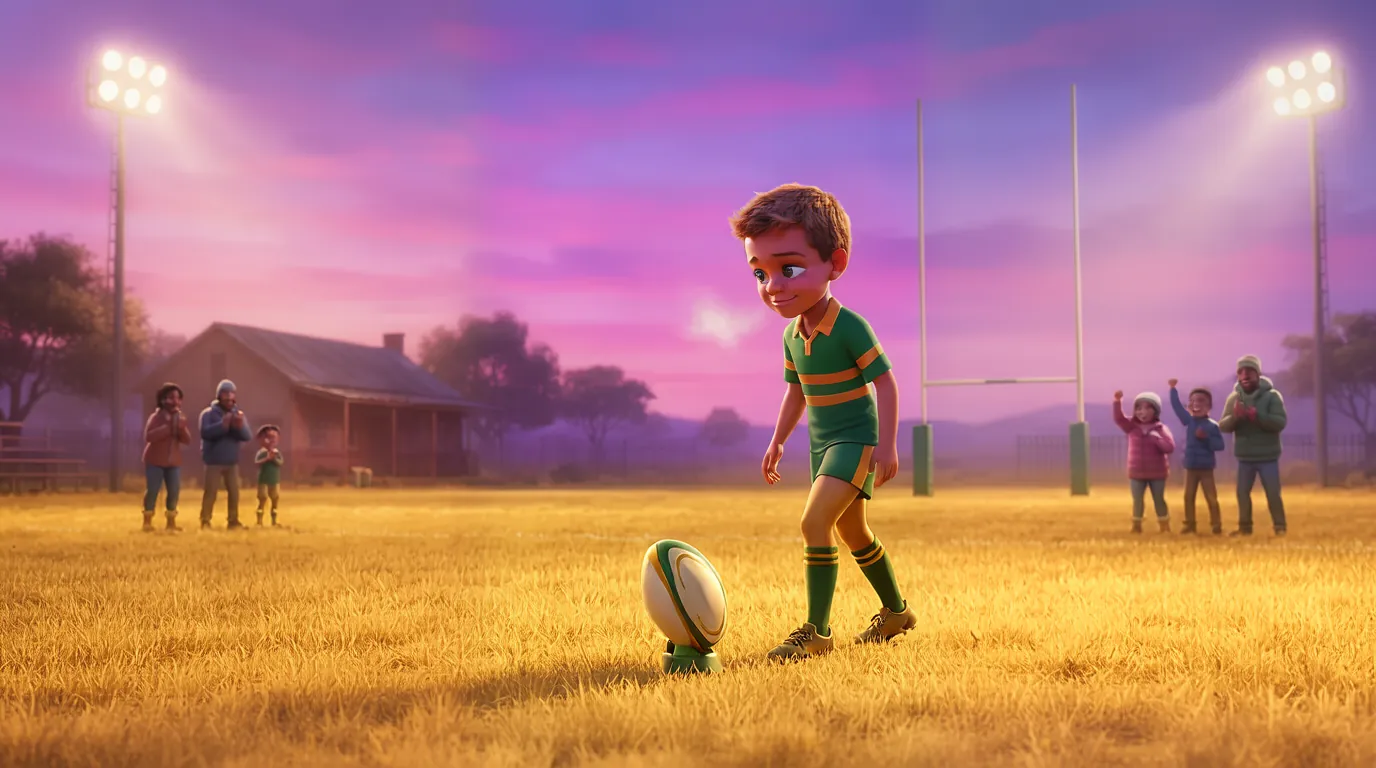
South Africa’s Grade 1 curriculum has a small domestic drama tucked into it: “The girl got into trouble because she broke a window”. It is the Department of Basic Education’s example for a reading skill, “Recognises cause and effect in a story”, and the third-term pages add a second mishap: “The boy fell off his bike because he rode too quickly down the steep hill.”1 Together the two open a window on Grade 1 in South Africa: the year CAPS, the national curriculum, starts asking children why things happen in a story, as well as what happened.
In short
- A child may start Grade 1 in the year they turn six, if they turn six by 30 June.
- The week has 23 hours of teaching, and a First Additional Language joins Home Language, Mathematics and Life Skills.
- In maths, children count to at least 50 and build number bonds, term by term, up to 10.
- In Home Language, CAPS suggests at least 15 minutes of phonics a day, and stories bring cause and effect.
- In Life Skills, the third term’s manners include “Waiting my turn” and “Sharing”.
Who starts Grade 1, and when?
The Department sets the earliest start: Grade 1 admission is at “age five turning six by 30 June in the year of admission”. Parents may register children “between April and October” each year, though application windows differ by province, so check with your provincial education department or the school.2
Many children start a year later. Since the Basic Education Laws Amendment Act came into force on 24 December 2024, compulsory schooling has begun with Grade R, in the year a child turns six; before, it began in the year a child turned seven.3, 4 A child who does Grade R in the year they turn six starts Grade 1 the year after. Where the roll-out of compulsory Grade R stands is explained in what children learn in Grade R.
What does a Grade 1 week look like?
Twenty-three hours of teaching, in four subjects. The new arrival is a First Additional Language, learnt alongside the child’s Home Language. CAPS allocates no time to it in Grade R; in Grade 1 the two languages share ten hours a week, so if Home Language has eight, the second language has two.5
| Subject | Grade R | Grade 1 |
|---|---|---|
| Home Language | 10 | 7–8 |
| First Additional Language | none | 2–3 |
| Mathematics | 7 | 7 |
| Life Skills | 6 | 6 |
| Total | 23 | 23 |
Each subject’s curriculum is published in all 11 official spoken languages,7 and Home Language has one more, in South African Sign Language, which became the twelfth official language in June 2026.8 What that means for a child learning to read is in raising a reader in more than one language.
The year itself has four terms. In 2027, learners at public schools start on Wednesday 13 January, and there are 197 school days in all.9
What maths does Grade 1 cover?
Mostly number. CAPS divides Foundation Phase maths into five content areas, and in Grade 1, 65% of the time goes to Numbers, Operations and Relationships; patterns, space and shape, measurement and data handling share the rest.5
Children estimate and count “to at least 50 everyday objects reliably”, up from 10 in Grade R, and “Counting by grouping is encouraged”: fifty bottle tops are quicker in fives or tens.5
They also meet number bonds, the pairs that make a number. CAPS builds them slowly: bonds to 5 in the first term, to 7 in the second, to 9 in the third and, in the fourth, “Practise number bonds to 10”.10 The goal is facts that children “know or recall fairly quickly”, so that a child who sees seven knows, without counting, that three more make ten.5
Seeing how many at a glance is a root of number bonds, and a domino is a good place to practise it: seeing its six as three and three is part-whole thinking, the idea a number bond is built on.11
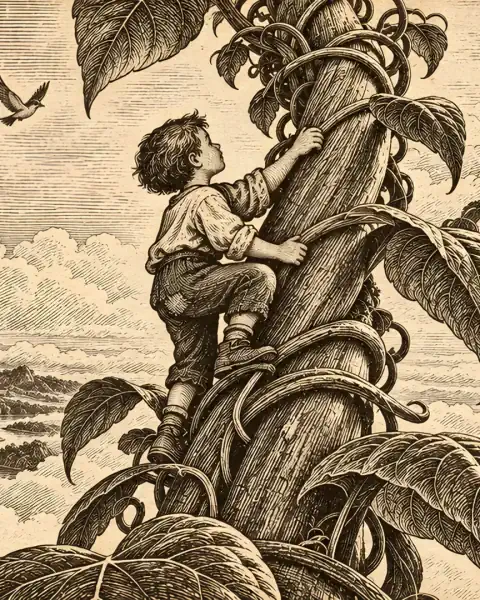
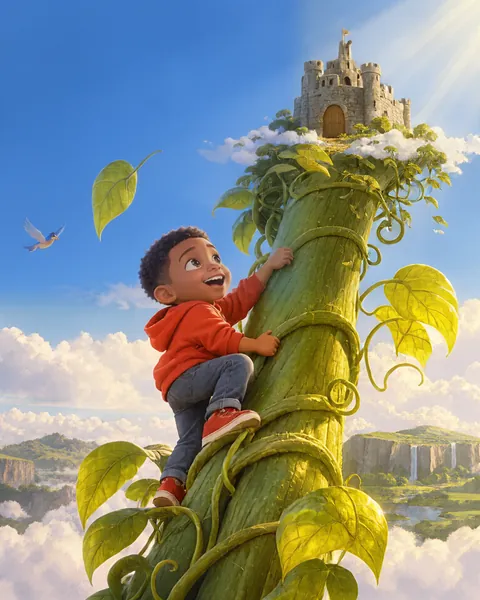
Our Up the Beanstalk takes the fourth-term goal as its reference. At the foot of the stalk grow seven big leaves on one side and three on the other, and the hero says “Seven and three make ten” before starting to climb. Before the climb home, every pair that makes ten has turned up, down to “ten and none”. The book is new, and nobody has tested it yet; what it offers is a story’s worth of practice at a goal the curriculum sets.
CAPS states its goal plainly: children should leave the Foundation Phase “with a secure number sense and operational fluency”.5 Why early number matters so much, and games for the pairs, are in number bonds to 10 and 20: a parent’s guide.
How does reading start in Grade 1?
With sounds, every day. CAPS suggests the minutes as well as the hours: at its suggested minimum, a Grade 1 class spends 15 minutes a day, five days a week, on phonics, which links the sounds children hear to the letters they see and picks up from the sound games of Grade R. Group reading gets 30 minutes a day, the biggest share of the week.1
Shorter slots go to shared reading and to the rest of Home Language: listening and speaking, handwriting and writing. That makes seven hours in all, and the Department says plainly that it “does not prescribe” how schools divide the time.1
There is good science behind all that sound work. A large US review found that phonological awareness, the ability to hear and play with the sounds in words, is among the early skills most strongly linked to later reading, though a predictor is not a cause.12 There are games for it in first sounds and phonics.
Why does Grade 1 teach cause and effect?
Because stories run on it. The broken window comes from shared reading, and the skill returns in the fourth term. Grade R lays the ground with prediction, “Predicts what will happen in a story through the pictures”; Grade 2 asks children to work out cause and effect as they listen; and by Grade 3 they do it “using connecting words such as ‘because’”.1 Life Skills names cause and effect among its core social-science ideas, too.13
Young children come ready for it. In the 2001 “blicket detector” studies, children of two, three and four worked out which objects made a machine light up and play music, just by watching which ones went with it switching on.14 And they want real reasons. In a 2009 study of children aged 2 to 5, when an adult’s answer didn’t actually explain anything, children were more likely to ask again, or to offer an explanation of their own.15 A story that stops to ask “why?” is speaking their language.
What does Grade 1 Life Skills cover?
Life Skills has six hours a week, in four study areas: two hours each of Creative Arts and Physical Education, and one each of Beginning Knowledge and Personal and Social Well-being.5, 13 The Creative Arts section holds one of the kindest lines in the curriculum: “There is no ‘right’ way to draw, and learners should be encouraged to express themselves freely, without fearing criticism.”13
In the third term comes a two-hour topic on manners and responsibilities, and its list could hang on a fridge: “Greeting people we know and greeting strangers; Waiting my turn; Listening to others; Sharing; Showing kindness; Being honest; Respecting other people and what belongs to them”. The note to teachers starts: “Use role play.”13
Expect it to take time. In a Swiss study where children divided sweets with a partner, most five- and six-year-olds kept the sweet when sharing meant giving up one of their own; by seven and eight, nearly half shared.16 If your six-year-old guards the last biscuit, they have plenty of company.
What helps? Working for something together seems to: three-year-olds shared a reward far more equally when they had earned it jointly.17 The rest of the research, and games, are in sharing and taking turns. Stories give children a place to practise, too. In Jakkals and Wolf, our retelling of a South African folk tale, the problems are ones any Grade 1 class knows: one spade for a dry dam, one tyre swing for three friends. “One swing means turns,” says the hero. “Ten swings each. Let’s count while we wait!”
If your six-year-old guards the last biscuit, they have plenty of company.
How can I help at home?
Through play, a few minutes at a time. Each of these matches something Grade 1 practises.
Children grow into Grade 1 at different speeds. If something seems much harder for your child than for their classmates, or worries them for weeks, talk to their teacher, who sees them every day. And when the year is done, Grade 2 builds on all of it.
CAPS is our reference; the Department of Basic Education doesn’t endorse us. The quotations keep the DBE’s own wording and punctuation.
Sources
- Department of Basic Education (2011). Curriculum and Assessment Policy Statement (CAPS): English Home Language, Foundation Phase, Grades R–3. Pretoria: DBE. Strands and time allocation (pp. 8–9), phase overview (p. 26), Grade 1 Term 3 (p. 69), Grade 1 Term 4 (p. 75), Grade 2 Term 3 (p. 92), Grade 3 Term 2 (p. 111). education.gov.za (PDF)
- Department of Basic Education. School admissions (information for parents and guardians). education.gov.za
- Basic Education Laws Amendment Act 32 of 2024, section 2 (amending section 3(1) of the South African Schools Act 84 of 1996). Government Gazette No. 51258, 16 September 2024. gov.za (PDF)
- Minister of Basic Education. Reply to parliamentary question NW1483 (2025): The BELA Act’s commencement on 24 December 2024, and the roll-out of compulsory Grade R. pmg.org.za
- Department of Basic Education (2011). Curriculum and Assessment Policy Statement (CAPS): Mathematics, Grade R. Pretoria: DBE. Time allocation (p. 6), specific aims (p. 8), content areas (p. 9), weighting of content areas (p. 11), mental mathematics (p. 13), Foundation Phase overview (p. 19). education.gov.za (PDF)
- Minister of Basic Education, replies to parliamentary questions NW451 (11 September 2024) and NW32 (2025) on Coding and Robotics. pmg.org.za (NW451); pmg.org.za (NW32)
- Department of Basic Education. Curriculum and Assessment Policy Statements (CAPS): Foundation Phase, Grades R to 3, in each official language. education.gov.za
- Constitution Eighteenth Amendment Act 3 of 2023, Government Gazette No. 49041, 27 July 2023 (sections 1 and 2; assented to 19 July 2023). juta.co.za (PDF); Proclamation R.321 of 2026, Government Gazette No. 54901, 26 June 2026, which brought the Act into force, text as summarised by Acts Online. acts.co.za; and Proclamation Notice 324 of 2026, Government Gazette No. 54933, 2 July 2026, correcting Proclamation R.321. justice.gov.za (PDF)
- Department of Basic Education. 2027 Calendar for public schools. Government Gazette No. 52178, 25 February 2025, p. 4. education.gov.za (PDF)
- Department of Basic Education (2011). Curriculum and Assessment Policy Statement (CAPS): Mathematics, Foundation Phase, Grades 1–3. Pretoria: DBE. Grade 1 overview per term (p. 43). education.gov.za (PDF)
- Clements, D. H. (1999). Subitizing: What is it? Why teach it? Teaching Children Mathematics, 5(7), 400–405. doi.org/10.5951/tcm.5.7.0400
- National Early Literacy Panel (2008). Developing Early Literacy: Report of the National Early Literacy Panel. Washington, DC: National Institute for Literacy. nichd.nih.gov (PDF)
- Department of Basic Education (2011). Curriculum and Assessment Policy Statement (CAPS): Life Skills, Foundation Phase, Grades R–3. Pretoria: DBE. Study areas and concepts (p. 8), Creative Arts (p. 9), Grade 1 Term 3 (p. 32). education.gov.za (PDF)
- Gopnik, A., Sobel, D. M., Schulz, L. E., & Glymour, C. (2001). Causal learning mechanisms in very young children. Developmental Psychology, 37(5), 620–629. pubmed.ncbi.nlm.nih.gov/11552758
- Frazier, B. N., Gelman, S. A., & Wellman, H. M. (2009). Preschoolers’ search for explanatory information within adult-child conversation. Child Development, 80(6), 1592–1611. doi.org/10.1111/j.1467-8624.2009.01356.x
- Fehr, E., Bernhard, H., & Rockenbach, B. (2008). Egalitarianism in young children. Nature, 454(7208), 1079–1083. doi.org/10.1038/nature07155
- Hamann, K., Warneken, F., Greenberg, J. R., & Tomasello, M. (2011). Collaboration encourages equal sharing in children but not in chimpanzees. Nature, 476(7360), 328–331. doi.org/10.1038/nature10278