Grade 2
Where eleven hides its ten
The year number bonds cross ten, stories bring open questions and Life Skills takes on squabbles. What CAPS asks, and what Grades 3 and 4 bring.

In English, the word “eleven” hides a ten. Chinese number words for 11 to 19 say it out loud, “ten-one, ten-two” and so on, and in a study published in 1995, K. F. Miller and colleagues compared preschoolers in the US and China: the children’s counting differed exactly where the number names did.1 That hidden ten matters in Grade 2. Under CAPS, South Africa’s national curriculum, it is the year number bonds cross ten and climb to 20, while stories bring open-ended questions, such as why something happened.
In short
- Grade 2 keeps Grade 1’s 23-hour week: Home Language, a First Additional Language, Mathematics and Life Skills.
- In maths, children count to at least 200, and number bonds grow from 10 to 15 to 20.
- In Home Language, stories bring listening for detail, open-ended questions, and cause and effect.
- Life Skills starts the year with friendship and “Dealing positively with conflict”.
- Grade 3 adds two hours a week, and for many children Grade 4 brings a switch to English.
What does a Grade 2 week look like?
Much like Grade 1. CAPS gives both years the same 23 hours a week: seven or eight hours of Home Language, two or three of a First Additional Language, seven of Mathematics and six of Life Skills.2 What shifts is the balance inside maths. Number still dominates, but it gives up a little time to shape and to measuring. By Grade 3, number is down to 58% and measuring is up to 14%.2
| Content area | Grade 1 | Grade 2 | Grade 3 |
|---|---|---|---|
| Number | 65% | 60% | 58% |
| Patterns | 10% | 10% | 10% |
| Shape | 11% | 13% | 13% |
| Measure | 9% | 12% | 14% |
| Data | 5% | 5% | 5% |
What maths does Grade 2 cover?
Bigger numbers, and quicker pairs. Children estimate and count to at least 200 everyday objects, four times Grade 1’s 50.2 Number bonds now cross ten. The first term goes back over “Practise number bonds to 10”, the second stretches to 15, and the third and fourth terms work on bonds to 20.3 The aim is the same as in Grade 1: facts that children “know or recall fairly quickly”.2
Twenty is a test of how well a child knows ten. CAPS describes children who “build up and break down numbers”, and that is what the teens ask for: thirteen is ten and three, and nine and four make thirteen because nine needs one more to make ten, leaving three.2 In English the words don’t help. The base-ten structure of number names is “less obvious in English than in Chinese”, as Miller’s team put it, and the difference showed up in children’s counting, though not in other early maths such as counting small sets.1 Their study compared English and Chinese only, so it tells us nothing about South Africa’s other languages.
Fractions, meanwhile, arrive the friendly way. Right through the Foundation Phase, CAPS builds them from sharing out real things, and children are “not expected to read or write fraction symbols”.2 Half a rusk comes long before ½.
That first term back at bonds to 10 is where our Up the Beanstalk fits: by the time the hero climbs home, every pair that makes ten has turned up, down to “ten and none”. The book is too recent for any trial; think of it as one more turn at the pairs Grade 1 began. For games that stretch the pairs to twenty, see number bonds to 10 and 20: a parent’s guide.
What does reading for meaning look like in Grade 2?
Alongside reading the words, Grade 2 asks what happened in a story, and why. In the third term, CAPS asks Grade 2 children to listen “for the detail in stories” and answer open-ended questions, for example by working out cause and effect.4
Understanding stories is a skill of its own, and it starts before reading does. A US study tested 297 children, aged four and six, on their language and their decoding, and again two years later. Understanding stories they heard or watched (one was an episode of Rugrats) went with vocabulary as one cluster of skills, oral language, related to decoding but distinct from it. In Grade 2, both clusters independently predicted how well children understood what they read.5
The children were nearly all white Americans, and the Grade 2 measures were taken at the same time, so the study can show that these skills go together but can’t say which causes which. CAPS, for its part, gives listening and speaking a strand of its own, beside reading and phonics.4
Causes are also what adult readers remember. They are more likely to recall the events in a story that have many causal connections than those with few, and to rate them as more important. In young children, the same paper notes, vivid events grab attention more than causal ones.5
“Why did she do that?” and “What is he thinking?” are both reading for meaning. There is more on reading together in what the research says about reading aloud, and on talking about characters’ feelings in helping children name their feelings.
How does Grade 2 handle friendship and conflict?
Grade 2 Life Skills opens the year with people. A four-hour first-term topic, “myself and others”, covers what makes a good friend, sharing, helping and showing respect at school and at home, and “Dealing positively with conflict”, including self-esteem and bullying. A six-hour topic, “everyone is special”, takes in “People are similar and people are different” and “I can be a hero”.6
The sense of fairness behind many squabbles grows in a particular order. In a study in seven societies, children everywhere came to object when a peer got more than they did; objecting when they themselves got more came later, and only in some places.7 There was no South African group. The rest of the research on fairness, and games for taking turns, are in sharing and taking turns: the science of fairness.
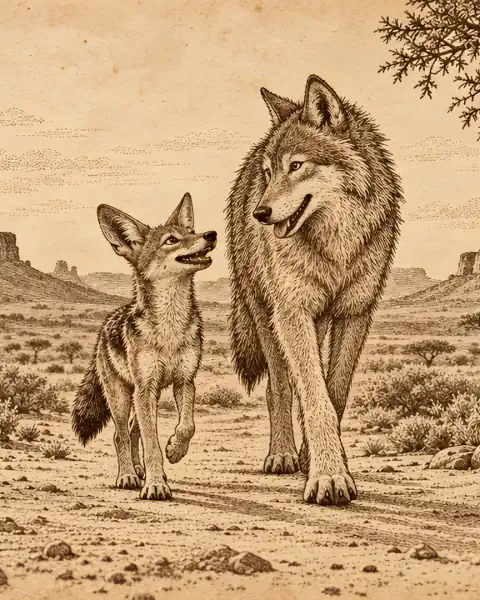
In Jakkals and Wolf, our retelling of a South African folk tale, the conflict is an old one, and the story keeps asking, “How does Wolf feel now?” Jakkals tries to trick Wolf into diving for a “great big cheese” at the bottom of the dam. “That’s not cheese. That’s the moon!” laughs the hero, and adds, “The moon is for everyone.” Jakkals looks at his paws: “Sorry, Wolf.”

Half a rusk comes long before ½.
What comes after Grade 2?
Grade 3, the last year of the Foundation Phase, and a longer week: 25 hours instead of 23. Languages get 11 hours, with three or four for the First Additional Language, and Life Skills gets seven.2 Counting stretches to at least 1,000 objects, and number bonds to 30.2
In stories, children work out cause and effect “using connecting words such as ‘because’”.4 And a six-hour Life Skills topic on feelings names “anger, fear, worry, loneliness” and includes how to say sorry, which is roughly where Jakkals ends up.6
Then comes Grade 4, and for many children a new language of learning. Most South African children learn in an African language from Grade R to Grade 3, “prior to switching to English from Grade 4 onwards”, in the words of a 2022 report for the 2030 Reading Panel, though not every school follows that pattern.9
One finding is reassuring. Comparing children in the same schools before and after a change of language policy, Stephen Taylor and Marisa von Fintel found that those taught in their home language in Grades 1 to 3 did better in English in Grades 4, 5 and 6.10 It wasn’t a randomised trial, and the effect varied from school to school. How families can read across that change is the subject of raising readers in a multilingual South African home.
How can I help at home?
Much of Grade 2 fits around supper, a few minutes at a time. Each of these ideas matches something in the curriculum.
Children move through the Foundation Phase at different speeds. If reading or numbers stay a struggle for weeks, or a falling-out at school won’t settle, their teacher is the first person to ask.
CAPS is our reference; the Department of Basic Education doesn’t endorse us. The quotations keep the DBE’s own wording and punctuation.
Sources
- Miller, K. F., Smith, C. M., Zhu, J., & Zhang, H. (1995). Preschool origins of cross-national differences in mathematical competence: The role of number-naming systems. Psychological Science, 6(1), 56–60. doi.org/10.1111/j.1467-9280.1995.tb00305.x
- Department of Basic Education (2011). Curriculum and Assessment Policy Statement (CAPS): Mathematics, Grade R. Pretoria: DBE. Time allocation (p. 6), content areas and fractions (p. 9), weighting of content areas (p. 11), mental mathematics (p. 13), Foundation Phase overview (pp. 19 and 23). education.gov.za (PDF)
- Department of Basic Education (2011). Curriculum and Assessment Policy Statement (CAPS): Mathematics, Foundation Phase, Grades 1–3. Pretoria: DBE. Grade 2 overview per term (p. 59). education.gov.za (PDF)
- Department of Basic Education (2011). Curriculum and Assessment Policy Statement (CAPS): English Home Language, Foundation Phase, Grades R–3. Pretoria: DBE. Strands (p. 8), guided reading (p. 12), Grade 2 Term 3 (p. 92), Grade 3 Term 2 (p. 111). education.gov.za (PDF)
- Kendeou, P., van den Broek, P., White, M. J., & Lynch, J. S. (2009). Predicting reading comprehension in early elementary school: The independent contributions of oral language and decoding skills. Journal of Educational Psychology, 101(4), 765–778. doi.org/10.1037/a0015956
- Department of Basic Education (2011). Curriculum and Assessment Policy Statement (CAPS): Life Skills, Foundation Phase, Grades R–3. Pretoria: DBE. Grade 2 Term 1 (p. 42), Grade 2 Term 4 (p. 45), Grade 3 Term 1 (p. 54). education.gov.za (PDF)
- Blake, P. R., McAuliffe, K., Corbit, J., Callaghan, T. C., Barry, O., Bowie, A., … Warneken, F. (2015). The ontogeny of fairness in seven societies. Nature, 528(7581), 258–261. doi.org/10.1038/nature15703
- van Niekerk, J. (2018). Afrikaans stories of Jackal and Hyena: Oral and written traditions. Tydskrif vir Letterkunde, 55(3), 80–95. doi.org/10.17159/2309-9070/tvl.v.55i3.5511
- Spaull, N. (2022). 2022 Background Report for the 2030 Reading Panel. Cape Town: 2030 Reading Panel, p. 5. readingpanel.co.za (PDF)
- Taylor, S., & von Fintel, M. (2016). Estimating the impact of language of instruction in South African primary schools: A fixed effects approach. Economics of Education Review, 50, 75–89. doi.org/10.1016/j.econedurev.2016.01.003