Grade R
Zero comes last
Snack time is a maths lesson, and the first sound to listen for is the one their name starts with. Here is the Grade R year in the curriculum’s own words, and how to play along at home.

In Grade R maths, zero is the last number to arrive. CAPS, South Africa’s school curriculum, has children count objects from 1 to 5 in the first term, to 7 in the second and to 10 in the third; only in the fourth term does the range become 0 to 10.1 That patience runs through what children learn in Grade R: counting takes in claps and stamps as well as objects, reading begins with the first sound of their own name, and Life Skills with how to say what they feel.
In short
- The year’s big steps: counting at least 10 things reliably, hearing the first sound of their own name, and saying what they feel.
- Under the 2011 CAPS timetable, Grade R has three subjects and 23 hours of teaching a week: Home Language (10 hours), Mathematics (7) and Life Skills (6).
- Since 24 December 2024, compulsory schooling has started with Grade R, in the year a child turns six. A child may start a year earlier if they turn five by 30 June.
Is Grade R compulsory, and who can start?
Yes, by law. Since the Basic Education Laws Amendment Act came into force on 24 December 2024, compulsory schooling has started with Grade R, in the year a child turns six; before, it started in the year a child turned seven.2, 3 The practical rules have taken longer. As of the Minister’s 2025 reply to Parliament, the regulations and norms for making Grade R compulsory were still being developed,3 and at the time of writing the Department’s own page for parents still says that “all children between the ages of 7 and 15 are compelled to attend school”.4
A child may also start a year early: the minimum age for Grade R is “age four turning five by 30 June in the year of admission”, and where places are short, the Act puts children of compulsory school age first.2, 4 The Department says parents may register children “between April and October of each year”, but provinces run their own application windows, so check yours.4
What subjects are taught in Grade R?
Three, for 23 hours a week, in the timetable CAPS set out in 2011:1
- Home Language: 10 hours
- Mathematics: 7 hours, as in every grade up to Grade 3
- Life Skills: 6 hours, split four ways: Beginning Knowledge (1 hour), Creative Arts (2), Physical Education (2) and Personal and Social Well-being (1)
CAPS allocates no First Additional Language time in Grade R; a second language joins the timetable in Grade 1, as Grade 1 in South Africa explains. The Department publishes the Foundation Phase curriculum in all 11 official spoken languages.5
Coding and Robotics is being phased in from 2026, grade by grade, in primary schools “where there is capacity to do so”, and the Foundation Phase version is “based on unplugged coding, and no devices will be required”.6, 7 Whether it changes the 23-hour week hasn’t been confirmed, so read these hours as the 2011 allocation.
What does Grade R maths cover?
Counting, above all, and counting properly. The Grade R goal is to “Estimate and count to at least 10 everyday objects reliably”, and to “Count forwards and backwards in ones from 1 to 10; Use number rhymes and songs”.1 Every term lists one-to-one correspondence, one number for one thing, and the curriculum’s examples are wonderfully ordinary. Children count with their bodies, by “Clapping hands; Stamping feet; Climbing steps”.
Even snack time counts. Under counting, the first term lists “Introduce the Helper’s Chart and the sequence in which refreshments are served”, and the daily programme gives an example: “each child gets a plate and a sandwich (one-to-one correspondence), Thandi would like a second sandwich, David doesn’t want any more.”1
There are no number bonds yet; those begin in Grade 1. Instead, children solve addition and subtraction problems said out loud, with answers up to 10, and meet fractions through fair shares. One example asks children to share “cookies so that they all get the same number of cookies. How many cookies can each teddy get?” In this phase, the curriculum adds, “learners are not expected to read or write fraction symbols.”1
Number is to be “the main focus” of maths from Grade R to Grade 3,1 and our parent’s guide to number bonds explains why early number skills matter so much.
One well-tested idea to borrow at home is a board game. In US studies, about an hour of playing a simple race game on a straight board numbered 1 to 10, saying the numbers out loud, improved low-income preschoolers’ number skills, and the gains lasted.8
For the science of counting, and more games, read how children learn to count. The Golden Road practises the Grade R goal: one touch for each thing, then “So how many?”, with numbers that climb from 3 to 11 across the book. What the book itself achieves is unknown, as it is only just out; the habit it rehearses is the curriculum’s own.
What does Grade R Home Language cover?
Home Language has three strands: listening and speaking, reading and phonics, and writing and handwriting.9 In Grade R, most of it happens out loud.
The first term starts with sounds, in daily 15-minute games. Children learn to tell sounds apart, “especially at the beginning of own name”, to pick the odd one out in “b, b, k, b”, and, in the curriculum’s words, to give “the beginning sound of own name”.9 Naming letters comes later: by the third term a child might say, “My name, Diane, begins with a letter d”.9 Sound first, letter names second.
The curriculum also uses classmates’ names to show that sounds and letters are different things, and expects children to recognise their own name and the names of at least five classmates.9
Stories run through the year: shared reading with “at least five Big Books per term”, listening “without interrupting, taking turns to speak”, acting stories out, and learning to predict “what will happen in a story through the pictures”.9
When you read aloud, though, your child is mostly looking at the pictures, and looks at the print more when the adult points to the words.10 In a large US classroom trial, a little pointing at print during read-alouds helped four-year-olds’ reading for two years after the programme ended.11 The fuller story is in what the research says about reading aloud.
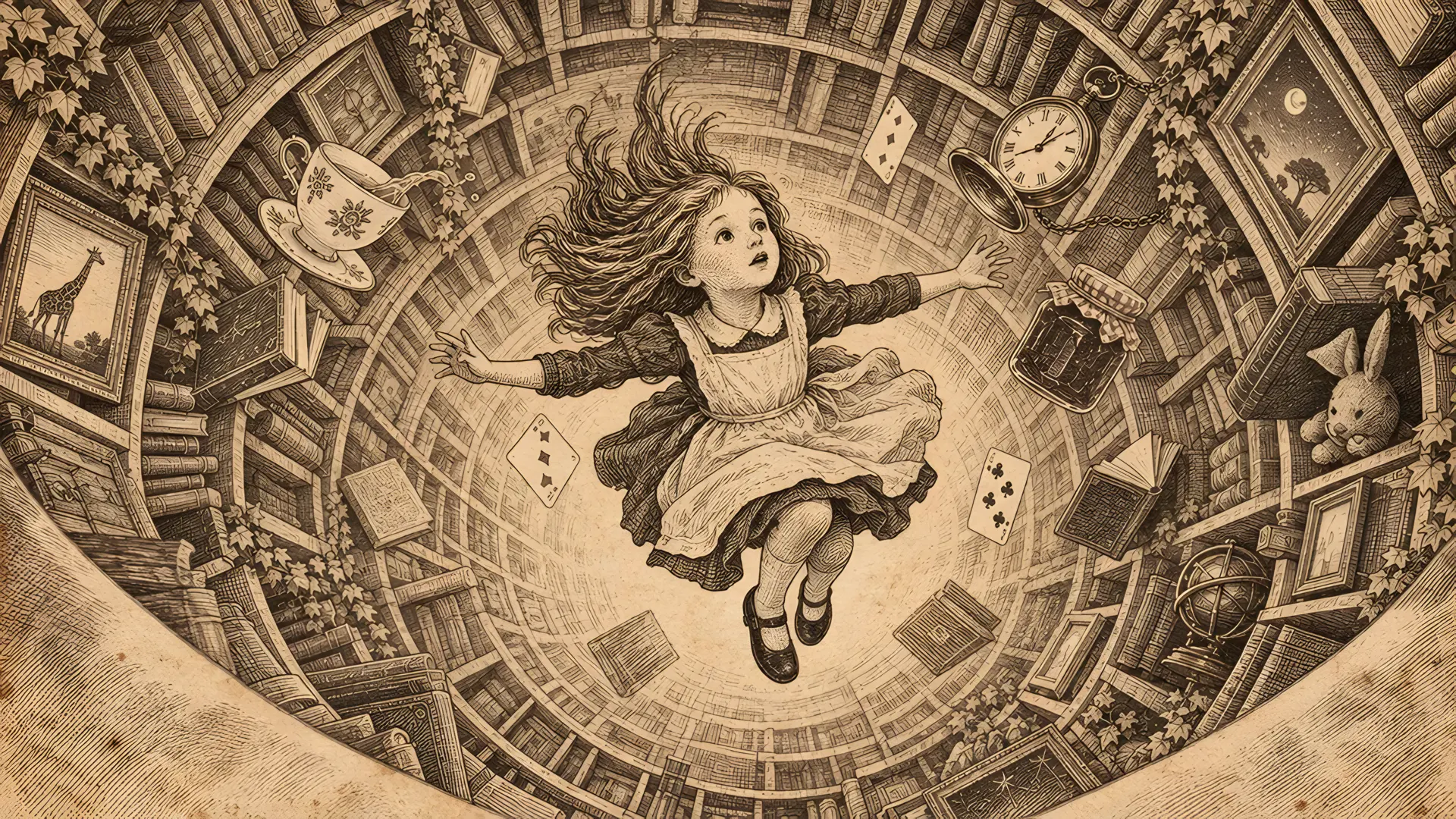
That was teachers in classrooms. At home, the simplest version is pointing to your child’s name and saying its first sound. Down the Rabbit Hole is built on that sound: every door in Wonderland opens to a first sound, and the great gate to theirs. More games are in first sounds and phonics.
What does Life Skills cover in Grade R?
Life Skills has four study areas: Beginning Knowledge, Personal and Social Well-being, Creative Arts and Physical Education.12 Feelings arrive in the first term. A two-hour topic called “in the classroom” covers “how to show my feelings in the classroom; how to express what I feel”, and another, called “me”, covers what makes each child special, including their name and their languages.12
Words for feelings seem to matter beyond the classroom: children who understand emotions tend to get on better with others later, though across many studies the links are modest.13 Helping children name their feelings has the studies, with games.
The arts, meanwhile, are meant to be free. “There is no ‘right’ way to draw, and learners should be encouraged to express themselves freely, without fearing criticism”, the curriculum says, and elsewhere it notes that “play is their natural way of learning in the arts.”12
What happens in each term?
Each term in CAPS has its own focus. Here is a flavour of the year, not the full programme:1, 9, 12
- Term 1: counting objects from 1 to 5; daily sound games, and the beginning sound of their own name; feelings in the classroom.
- Term 2: counting from 1 to 7; taking turns to speak, without interrupting; acting out stories.
- Term 3: counting from 1 to 10; naming some letters, especially those in their own name.
- Term 4: counting from 0 to 10; describing the numbers 8, 9, 10 and 0.
In 2027, learners at public schools start on Wednesday 13 January, and the four terms run from 13 January to 19 March, 6 April to 25 June, 20 July to 22 September and 5 October to 8 December: 197 school days in all.14 Private schools set their own dates.
How can you help at home?
Grade R is mostly talk, play and stories, which is to say that a good deal of it looks like bedtime. None of this needs a worksheet.
The curriculum wording on this page is from the Department of Basic Education’s CAPS for Grade R Mathematics, English Home Language and Life Skills (2011). CAPS is our reference; the Department of Basic Education doesn’t endorse us.
Sources
- Department of Basic Education (2011). Curriculum and Assessment Policy Statement (CAPS): Mathematics, Grade R. Pretoria: DBE, pp. 6, 9, 11, 16, 19, 23, 41, 44 and 48. education.gov.za (PDF)
- Basic Education Laws Amendment Act 32 of 2024 (amending sections 3(1) and 5(4)(a) of the South African Schools Act 84 of 1996). Government Gazette No. 51258, 16 September 2024. gov.za (PDF)
- Minister of Basic Education. Reply to parliamentary question NW1483 (2025): The BELA Act’s commencement on 24 December 2024, and the roll-out of compulsory Grade R. pmg.org.za
- Department of Basic Education. School admissions (information for parents and guardians). education.gov.za
- Department of Basic Education. Curriculum and Assessment Policy Statements (CAPS): Foundation Phase, Grades R to 3, in each official language. education.gov.za
- Minister of Basic Education. Reply to parliamentary question NW32 (2025): Coding and Robotics in primary schools. pmg.org.za
- Minister of Basic Education. Reply to parliamentary question NW451 (11 September 2024): The Foundation Phase Coding and Robotics curriculum. pmg.org.za
- Ramani, G. B., & Siegler, R. S. (2008). Promoting broad and stable improvements in low-income children’s numerical knowledge through playing number board games. Child Development, 79(2), 375–394. doi.org/10.1111/j.1467-8624.2007.01131.x
- Department of Basic Education (2011). Curriculum and Assessment Policy Statement (CAPS): English Home Language, Foundation Phase, Grades R–3. Pretoria: DBE, pp. 8, 26, 33 to 37 and 46. education.gov.za (PDF)
- Justice, L. M., Pullen, P. C., & Pence, K. (2008). Influence of verbal and nonverbal references to print on preschoolers’ visual attention to print during storybook reading. Developmental Psychology, 44(3), 855–866. doi.org/10.1037/0012-1649.44.3.855
- Piasta, S. B., Justice, L. M., McGinty, A. S., & Kaderavek, J. N. (2012). Increasing young children’s contact with print during shared reading: Longitudinal effects on literacy achievement. Child Development, 83(3), 810–820. doi.org/10.1111/j.1467-8624.2012.01754.x
- Department of Basic Education (2011). Curriculum and Assessment Policy Statement (CAPS): Life Skills, Foundation Phase, Grades R–3. Pretoria: DBE, pp. 8, 9 and 15. education.gov.za (PDF)
- Trentacosta, C. J., & Fine, S. E. (2010). Emotion knowledge, social competence, and behavior problems in childhood and adolescence: A meta-analytic review. Social Development, 19(1), 1–29. doi.org/10.1111/j.1467-9507.2009.00543.x
- Department of Basic Education. 2027 Calendar for public schools. Government Gazette No. 52178, 25 February 2025, p. 4. education.gov.za (PDF)