Starting school
First day, first sound
In January, children aged four to six start Grade R or Grade 1. What the first term asks of them, a book that makes a good gift for it, and gentle help with the goodbyes.
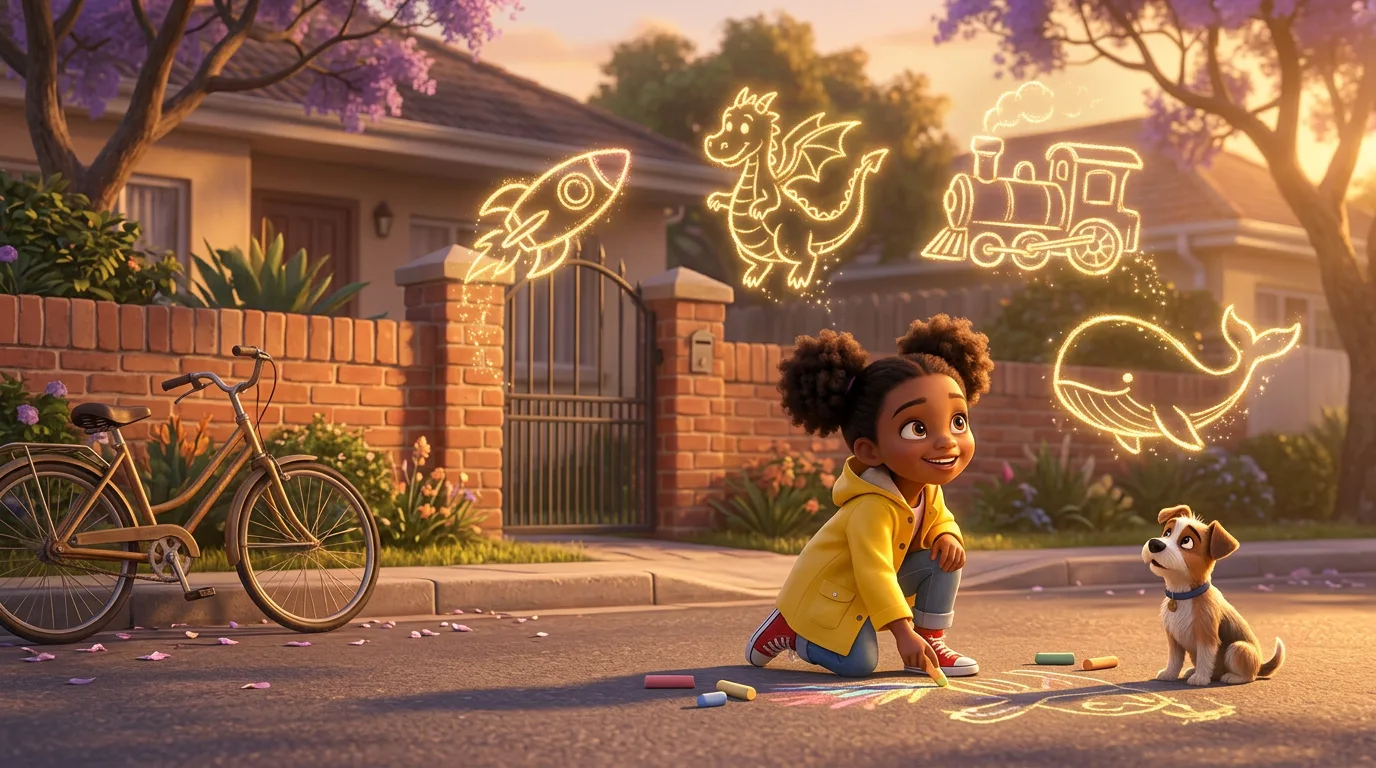
In the first term of Grade R, one Life Skills topic is called, simply, “me”: “What makes me special - include name, language/s, gender”.1 Home Language starts in the same place, with daily sound games that listen “especially at the beginning of own name”.2 So school, for a child starting Grade R in January, begins with who they are. That is worth knowing when you choose a starting-school gift, for Grade R or Grade 1, and when you help with the goodbyes.
In short
- The 2027 school year starts on Wednesday 13 January, and by law compulsory schooling now starts with Grade R.
- In the first term of Grade R, children play sound games with their own names, count up to five objects and talk about how they feel.
- Grade 1 adds a First Additional Language and number bonds, and counting reaches at least 50 objects.
- For the goodbyes: help them name the feeling, keep the evenings steady, and keep the bedtime story.
When does the 2027 school year start?
Public-school learners start on Wednesday 13 January 2027. Term 1 runs to 19 March, and the year has four terms and 197 school days; independent schools set their own dates.3
Since the Basic Education Laws Amendment Act came into force on 24 December 2024, compulsory schooling starts with Grade R: parents must send a child to school, “starting from grade R”, from the year the child turns six. Before, it began in the year a child turned seven.4, 5 Where the roll-out has got to is in our Grade R guide.
The minimum ages are set out too. A child may start Grade R at “age four turning five by 30 June” of that year, and Grade 1 at “age five turning six by 30 June”.6 Those are the earliest a child may start, and many do Grade R in the year they turn six. Application windows differ by province, so check with your provincial education department or the school.
What does the first term of Grade R ask of a five-year-old?
Grade R has three subjects and 23 hours a week: 10 hours of Home Language, 7 of Mathematics and 6 of Life Skills. CAPS allocates no time to a First Additional Language until Grade 1.7
Reading starts with the ears, not with letters. In daily 15-minute sound games, Grade R children learn to tell sounds apart and to give “the beginning sound of own name”, and they learn to recognise their own name and “names of at least five other children in the class”.2 Letters come later: by the third term, the curriculum’s example child says, “My name, Diane, begins with a letter d”.2
In maths, the first term’s range is 1 to 5, counted with “Body parts; Clapping hands; Stamping feet; Climbing steps”, and matched one to one at snack time.7
And Life Skills makes room for feelings from the start: in the classroom topic, children learn “how to express what I feel”.1 There’s a fuller guide to the year in what children learn in Grade R, and more on the sound games in how reading begins.
What changes in Grade 1?
Grade 1 adds a First Additional Language, two to three hours a week, and Home Language drops to seven or eight.7 At the suggested minimum, phonics gets 15 minutes a day, five days a week.2 Children estimate and count to at least 50 objects, and they begin number bonds, the pairs that make a number: bonds to 5 in the first term, then 7, then 9, and bonds to 10 by the fourth.8 In Life Skills, the third term’s manners include “Waiting my turn” and “Sharing”, taught through role play.1 The whole year is in Grade 1 in South Africa: what CAPS expects.
CAPS is our reference; the Department of Basic Education doesn’t endorse us. The quotations keep the DBE’s own wording and punctuation.
Which book makes a good starting-school gift?
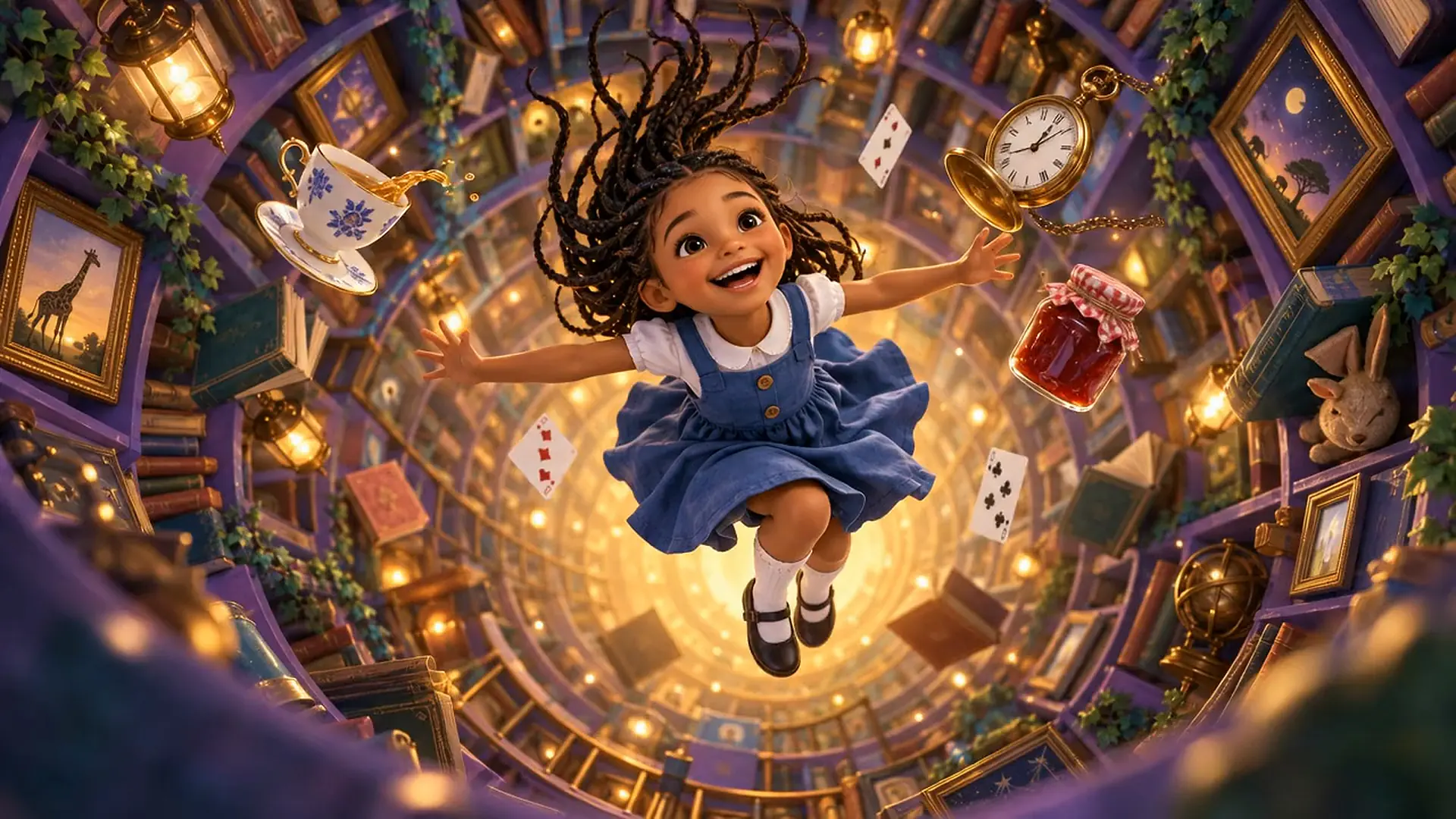
One about being brave, or one that practises a first-term skill. In Second to the Right, our retelling of Peter Pan, your child flies over Table Mountain at night and names one feeling after another, even comforting a Lost Boy who misses his mum, with a refrain to carry into a new classroom: “Name it, say it, breathe it out.” Its skill is Grade R’s “how to express what I feel”. For the sound games, Down the Rabbit Hole sends your child through doors that open to first sounds, up to a great golden gate that opens only to the first sound of their own name.
Whichever you choose, choose the one your child will want again. In a small US study of low-income mothers and fathers, it was children’s interest in reading that carried the link between how well their parents read to them and the size of their vocabulary.9 The study didn’t look at particular books, and these two, being new, haven’t been tested themselves; their skills come straight from Grade R’s curriculum, and the ways of practising them from well-studied methods. Interest is the part a good story has to earn.
How can I help with goodbyes and new routines?
Gently, and mostly with things you already do. The first goodbyes at a classroom door can be hard on children and on parents, and there is no one right way to do them. Three things are worth trying.
Help them name the feeling. South Africa’s framework for children before Grade R asks adults to “Help children to put feelings into words”, and Grade R’s first term picks up the same thread.10 Stories are a gentle place to practise: in small studies of toddlers, asking a child how a character feels, and why, mattered more than how many feeling words the parent used.11
Keep the evenings steady. In a survey of mothers of 10,085 children up to the age of five, in 13 countries and regions, a regular bedtime routine was linked with falling asleep faster, waking less in the night and sleeping longer, and the more nights a week, the better.12 It was an online survey, sponsored by Johnson & Johnson, with no African country in it, and it didn’t ask what the routines contained, but it is a sensible guide: settle the school-night routine in the last week of the holiday, and keep the story in it.
Know when to ask. If your child’s worries are intense, last for weeks or spill into the rest of the day, talk to the teacher, a clinic sister or your doctor. There are more ideas in helping children name their feelings.
Sources
- Department of Basic Education (2011). Curriculum and Assessment Policy Statement (CAPS): Life Skills, Foundation Phase, Grades R–3. Pretoria: DBE. Grade R Term 1 (p. 15), Grade 1 Term 3 (p. 32). education.gov.za (PDF)
- Department of Basic Education (2011). Curriculum and Assessment Policy Statement (CAPS): English Home Language, Foundation Phase, Grades R–3. Pretoria: DBE. Time allocation (pp. 8–9), Grade R Term 1 (pp. 33–35), Grade R Term 3 (p. 46). education.gov.za (PDF)
- Department of Basic Education. 2027 Calendar for public schools. Government Gazette No. 52178, 25 February 2025, p. 4. education.gov.za (PDF)
- Basic Education Laws Amendment Act 32 of 2024, section 2 (amending section 3(1) of the South African Schools Act 84 of 1996). Government Gazette No. 51258, 16 September 2024. gov.za (PDF)
- Minister of Basic Education. Reply to parliamentary question NW1483 (2025): The BELA Act’s commencement on 24 December 2024, and the roll-out of compulsory Grade R. pmg.org.za
- Department of Basic Education. School admissions (information for parents and guardians). education.gov.za
- Department of Basic Education (2011). Curriculum and Assessment Policy Statement (CAPS): Mathematics, Grade R. Pretoria: DBE. Time allocation (p. 6), daily programme (p. 16), phase overview (p. 19), Grade R term overview (p. 41). education.gov.za (PDF)
- Department of Basic Education (2011). Curriculum and Assessment Policy Statement (CAPS): Mathematics, Foundation Phase, Grades 1–3. Pretoria: DBE. Grade 1 overview per term (p. 43). education.gov.za (PDF); counting to 50 from the Grade R document’s phase overview (p. 19).
- Malin, J. L., Cabrera, N. J., & Rowe, M. L. (2014). Low-income minority mothers’ and fathers’ reading and children’s interest: Longitudinal contributions to children’s receptive vocabulary skills. Early Childhood Research Quarterly, 29(4), 425–432. doi.org/10.1016/j.ecresq.2014.04.010
- Department of Basic Education (2015). The South African National Curriculum Framework for Children from Birth to Four. Pretoria: DBE. Well-being, Towards Grade R (p. 30). education.gov.za (PDF)
- Brownell, C. A., Svetlova, M., Anderson, R., Nichols, S. R., & Drummond, J. (2013). Socialization of early prosocial behavior: Parents’ talk about emotions is associated with sharing and helping in toddlers. Infancy, 18(1), 91–119. doi.org/10.1111/j.1532-7078.2012.00125.x
- Mindell, J. A., Li, A. M., Sadeh, A., Kwon, R., & Goh, D. Y. T. (2015). Bedtime routines for young children: A dose-dependent association with sleep outcomes. Sleep, 38(5), 717–722. doi.org/10.5665/sleep.4662